
Trusting the Turning
On the beautiful, messy syncretism of a creation-centered faith

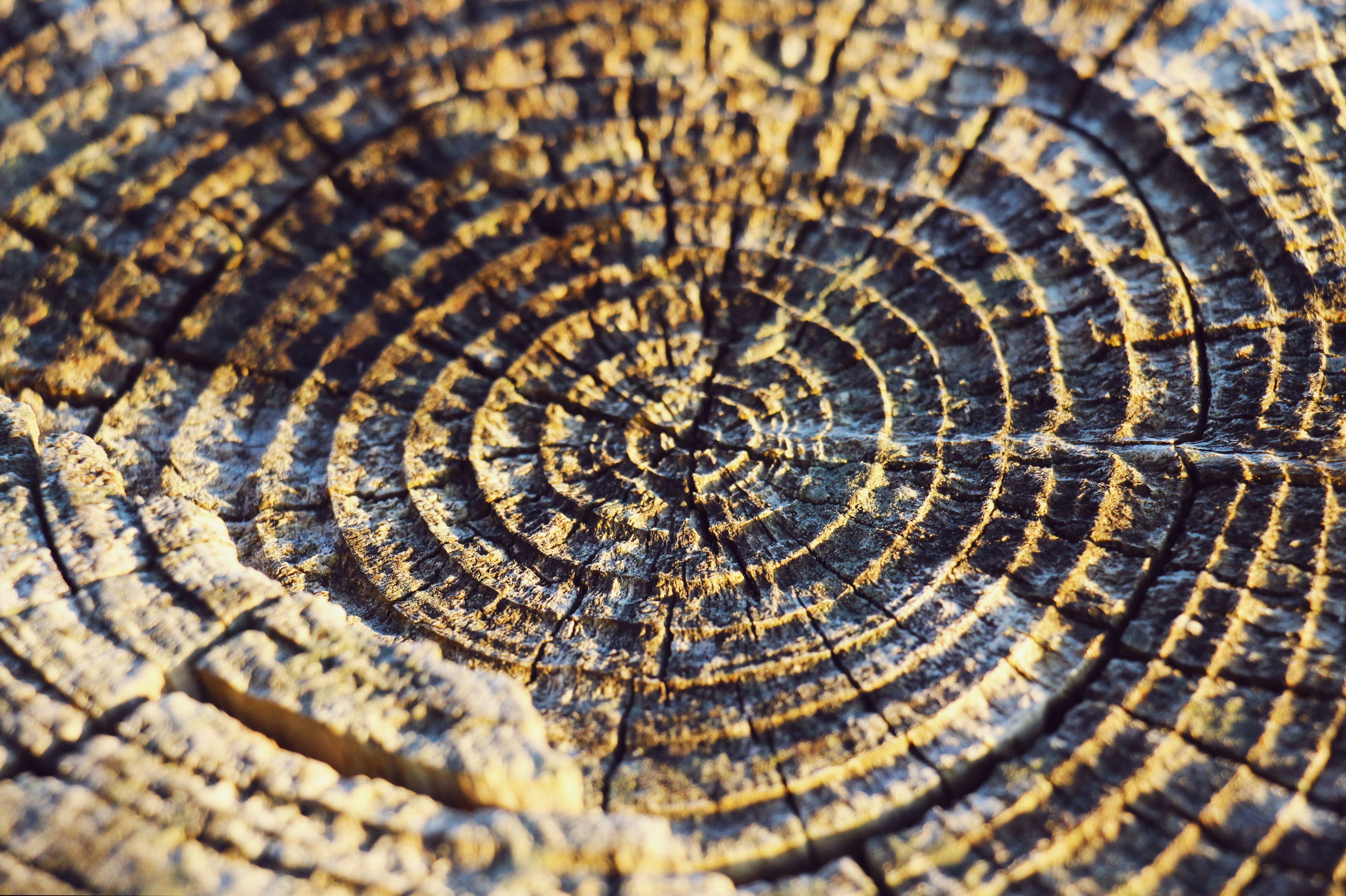
We live in a culture obsessed with arrows.
We’re taught and told from a very young age that life is a nothing more than a straight line of progress, relentless productivity, and upward trajectories. We measure our value by the ticking of the clock, an industrial invention designed to keep machines running, even when they run dry. It forces our bodies and souls to produce above all else, to keep producing at the same capacity whether it’s the dead of winter or the height of the dog days of summer. We treat time as a resource to be spent, conquered, or managed.
But the earth knows nothing of arrows. The earth speaks in circles.
Lately, in my own wanderings through the wild places, I have found myself leaning deeply into the rhythms of the Celtic Wheel of the Year. For our ancestors (and for those of us trying to reclaim a creation-centered spirituality) the Wheel is so much more than a calendar hanging on a wall. It’s a profound reorientation of time itself. It’s a gentle, radical invitation to step off the corporate and colonial conveyor belt of capitalism in order to remember that we are seasonal creatures, woven from the same divine breath and stardust as the land we walk upon.
And when we do this, when we look at time as a wheel rather than a straight line, our entire relationship with our inner landscape shifts. In a linear world, a period of darkness, grief, or waiting feels like a dead end, a failure to move forward. But on the Wheel, the dark is simply the necessary womb of the light.
The Celtic year begins not in the blinding optimism of January resolutions but in the deep dark of late autumn at Samhain. It reminds us that all life begins in the dark: in the soil, in the womb, in the quiet pauses before the dawn. By aligning ourselves with the Wheel, we give ourselves permission to experience the full spectrum of being human. There is a time to bloom, a time to harvest, a time to let go, and a time to rest deeply in the frozen earth. None of these seasons are wasted; they are all holy, and? They are all temporary.
What I find most beautiful about this way of tracking time is how porous and hospitable it is. It refuses to be neatly compartmentalized. When Christianity arrived in the Celtic lands, it didn’t completely plow over the existing spiritual topsoil. Instead, the early Celtic saints understood something that many modern institutional churches have forgotten: that the Divine Mystery was already speaking through the landscape, long before steeples and pews were built.
Thus, the great agricultural and pastoral thresholds of the Celtic calendar became beautifully intertwined with Christian rhythms, turning the landscape into a “thin place” where heaven and earth meet. Like how Imbolc, the early February Celtic festival marking the first stirrings of milk in the ewes and life in the frozen soil, became the feast of St. Brigid. Or how Samhain, the threshold where the harvest ends and winter begins, became Allhallowtide (All Saints’ Day and All Souls’ Day), a sacred season to honor the ancestors and loved ones who have crossed the ultimate threshold.
This cross-pollination of sorts reminds us that our hunger for the Holy isn’t exclusive to one dogma. It’s a universal human response to the turning of the earth. The Wheel pulls these traditions together, showing us that the cross and the circle can beautifully inhabit the very same sacred ground.
A Note on the Modern Wheel
For those who are familiar with modern spiritual spaces, it’s worth noting how the contemporary understanding of this cycle varies from its ancient roots. If you look up the “Wheel of the Year” today, you will likely find the modern Neo-Pagan or Wiccan version, which is an eight-fold calendar that features four solar festivals (the solstices and equinoxes) and four pastoral festivals. This specific eight-fold wheel is actually a modern synthesis, largely constructed in the mid-20th century.
The historical Celtic orientation, however, was deeply rooted in the gritty reality of survival in ancient times. The Celts were primarily a pastoral, agrarian people whose lives depended on the movement of cattle and crops rather than the exact mathematical alignment of the sun. Their year was essentially split into two halves, dark and light, and anchored primarily by the four “cross-quarter” fire festivals (Samhain, Imbolc, Beltane, and Lughnasadh). For them, time was a dynamic dialogue with the soil: when to drive cattle to high pastures, when to light community fires for protection, and when to brace for the cold.
Understanding this distinction is not an attempt to diminish the modern wheel by any means. Rather, it simply grounds us in the history of a people who looked to the earth, rather than a mechanical clock, to tell them who and where they were.
🍂 A Special Invitation: Walking the Wheel Together
Speaking of thresholds and turning wheels... I am so incredibly thrilled to finally share a project that has been brewing in the quiet winter of my own heart for a long time!
This fall, I will be officially launching my brand new Wheel of the Year Course.
This will be a year-long learning journey designed to take us deep into the heart of the Celtic wheel. Together, we will trace the history, explore the folklore, unearth the cross-pollinated faith traditions, and gather practically to learn how to ground these ancient rhythms within our very modern lives. If you have been longing to step off the conveyor belt of linear time and embody a more cyclical, earth-honoring path, I would be so honored to walk it with you.
As a deep thank you to this community, paying subscribers of The Inner Sanctuary will receive an exclusive discount code to use off the full course price when registration opens. If you have been considering upgrading your subscription to support this work, now is a beautiful time to do so.
Stay tuned for more details and registration dates in the coming weeks!
With you at the threshold,
Elena
